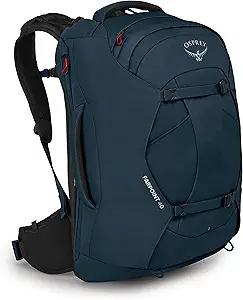
A good travel gift has to survive the awkward middle ground between useful and too personal. The Osprey Farpoint 40 is landing there because it gives travelers something better than another gadget: a pack they can take through airports, weekend road trips, hostels, train stations, and national park towns without dragging a roller bag behind them. That is the real reason gift buyers are paying attention. The official Osprey listing frames the bag as a 40-liter carry-on travel pack with a 3.27-pound weight, 21.7 x 13.8 x 9.1-inch dimensions, large front-panel access, a stowaway harness, a hipbelt, and a sleeve for most laptops up to 16 inches. Amazon’s current “Most Gifted” result for internal-frame backpacks also shows an Osprey Farpoint 40L listing, which fits the wider pattern: people want a carry-on backpack that feels like a smart purchase, not a throwaway present. For readers tracking practical product trends through travel gear news and buying signals, this one makes sense because it solves a common American travel problem: packing enough without checking a bag.
Why Osprey Farpoint 40 Makes Sense as a Gift
Most travel gifts fail because they are either too small to matter or too specific to match the person’s habits. A luggage tag is safe, but forgettable. A hard-shell suitcase can be useful, but sizing, color, storage space, and wheel quality turn it into a bigger decision. This pack sits in a cleaner lane. It feels generous without forcing the recipient into one type of trip.
A Carry-On Backpack That Feels Less Like a Guess
A carry-on backpack works as a gift because it does not ask the buyer to know every detail of someone’s travel style. You do not need to know whether they prefer resorts, road trips, camping cabins, or cheap flights from Denver to San Diego. A soft-sided travel pack can cross those lines.
That matters in the U.S., where travel is rarely one neat category. One person may fly to Austin for a wedding, drive to the Smoky Mountains in fall, then take a short work trip to Chicago. A roller bag handles airports well, but it gets clumsy when stairs, gravel, bus stops, or packed rideshares enter the day.
The non-obvious gift angle is that this bag is not exciting because it looks dramatic. It is exciting because it removes small travel headaches before they begin. That is harder to photograph, but easier to appreciate after the first trip.
The Gift Works Because It Is Practical, Not Flashy
The best gear gifts tend to be boring in the right places. Zippers need to move cleanly. Handles need to land where your hand reaches. A hipbelt needs to take weight off your shoulders when you are walking longer than planned. None of that feels glamorous in a product photo.
Then the trip starts.
A traveler leaving JFK after a delayed evening flight may care less about color and more about whether the straps tuck away before the bag goes in an overhead bin. Someone catching a shuttle in Moab may care about load support more than another hidden pocket. This is where a good adventure travel pack earns its place.
That is why the gifting trend feels believable. The buyer sees a name they trust. The recipient gets something that can change how they pack. The emotional payoff comes later, when the bag saves them from baggage claim.
What Makes This Travel Backpack Feel Built for American Trips
A travel backpack has to match the way people move, not the way brands stage catalog photos. Americans often mix flights, rideshares, rental cars, hotel elevators, sidewalks, and outdoor stops into one trip. A bag that only works in one scene becomes a burden by the second day.
The 40-Liter Sweet Spot for One-Bag Travel
The 40-liter size is the heart of the appeal. It is large enough for a long weekend, a lean week, or a warm-weather trip with packing cubes. It is also small enough to stay in the carry-on conversation for many domestic routes, though every airline still controls its own limits.
That last part matters. Gift buyers should not promise that any bag will pass every gate check in every situation. A stuffed soft bag can become wider than its listed shape. A strict budget carrier may treat the same pack differently than a major U.S. airline. Smart packing still matters.
The advantage is flexibility. A person who learns one-bag travel can skip checked-bag fees, move faster after landing, and avoid the quiet panic of waiting at a carousel while a connection clock keeps ticking. For a college student flying home, a nurse taking a three-day conference trip, or a couple planning a national park weekend, that benefit feels immediate.
Why Comfort Matters Before the Airport
Many travel bags are designed like boxes with straps. That can work for a short walk from car trunk to hotel room. It falls apart when the walk stretches across a terminal, a downtown train platform, or a parking lot after midnight.
This pack borrows from backpacking logic. Osprey lists a LightWire frame, stowaway harness, hipbelt, AirScape backpanel, and adjustable torso length among the carry features and product details. Those details matter because load transfer is not outdoor snobbery. It is the difference between carrying weight on your shoulders and letting your hips help.
Here is the counterintuitive part: comfort can matter more on a city trip than on a trail. On a trail, you expect the walk. In a city, the extra mile surprises you. The hotel room is not ready. The subway entrance is closed. The rideshare pickup zone moves. That is when a better harness stops being a feature and starts feeling like mercy.
Where the Adventure Bag Wins and Where It Does Not
No bag deserves blind praise. The same traits that make this one gift-friendly also create limits. It is not a camera bag. It is not a luxury office backpack. It is not made for someone who wants a separate pocket for every cord, charger, and tiny device.
Great for Trains, Hostels, Road Trips, and Tight Schedules
The bag’s strongest use case is movement. A clamshell-style opening makes it easier to pack folded clothing, cubes, sandals, a toiletry kit, and a light jacket without digging from the top like a hiking pack. Osprey also lists large front-panel access, internal compression straps, an external toiletry pocket, padded top and side handles, and lockable sliders on the main compartment zipper.
That mix helps on trips with messy transitions. Think of a traveler leaving Boston on an early Amtrak, sleeping in New York, then flying out of Newark the next day. A suitcase works, but a pack keeps both hands free for coffee, phone, tickets, or a kid’s hand.
The quiet win is that the bag does not ask you to unpack your whole life to find one thing. It still rewards packing cubes, but it does not demand a perfect system. For many travelers, that is the difference between a bag they admire and a bag they use.
The Pocket Setup Is Better for Clothes Than Gadgets
This is where buyers should be honest. If the recipient travels with two laptops, a tablet, camera batteries, a microphone, and a pouch full of adapters, this may not be the neatest choice. The laptop sleeve helps, but the overall layout leans more toward clothing and trip gear than daily tech sorting.
That is not a flaw for the right person. It is a signal.
A strong one-bag travel setup often works best when the main bag stays simple and smaller pouches handle detail work. Toiletries go in one pouch. Chargers go in another. Laundry gets a soft sack. The bag carries the trip; the pouches carry the chaos.
For gift buyers, this means the bag may pair well with a carry-on packing checklist or a travel backpack comparison guide. Those internal resources can help readers match the pack to the traveler instead of buying based on trend heat alone.
How to Choose It Without Getting the Gift Wrong
The safest way to buy travel gear is to think about the recipient’s next three trips, not their dream trip. A bag for a fantasy month in Europe may miss the mark if the person mostly takes weekend flights, family visits, and short outdoor breaks.
Check Fit, Airline Rules, and Packing Style
Fit comes first. Osprey’s page stresses adjustable fit and torso sizing guidance, and that should not be treated as a small detail. A pack can have strong features and still feel wrong on the wrong body. If the recipient is shorter, has narrow shoulders, or prefers women-specific fit, the related Fairview line may deserve a look.
Airline rules come next. The official product page says the pack is sized to meet domestic carry-on requirements, and its listed dimensions sit in the range many travelers expect for overhead-bin packing. Still, the buyer should check the carrier before a specific trip, especially when basic economy fares or smaller aircraft are involved.
Packing style is the third filter. This bag suits people willing to fold, roll, compress, and edit. It is less suited to someone who wants to bring four pairs of shoes for a three-night trip. That sounds harsh, but it protects the gift from disappointment.
Pair It With Small Add-Ons That Do More Than Decorate
A travel backpack becomes easier to love when the first packing session goes well. That is why smart add-ons can beat flashier extras. Packing cubes, a flat toiletry kit, a laundry pouch, and a small tech organizer make the bag feel more complete without changing its character.
Do not overbuild the gift. Too many extras can turn a clean travel setup into a puzzle. Two packing cubes and one charger pouch may do more than a full bundle of accessories the person has to learn.
A good example is a graduation gift for someone moving between home, campus, and low-cost flights. The pack handles the main load. A cube separates clean clothes. A pouch keeps cords out of socks. The recipient does not need a lecture on minimalism. The setup teaches the habit through use.
That is the deeper reason this adventure travel pack has gift momentum. It does not only hold items. It nudges the traveler toward lighter, calmer trips.
Conclusion
The best travel gifts do not shout from the wrapping paper. They prove themselves at 6 a.m., when the car is late, the boarding group is called, and the traveler can still move without fighting their luggage. That is where this pack’s rise makes sense. It offers enough space for real trips, enough structure for longer walks, and enough restraint to keep packing from turning into a moving project.
The Osprey Farpoint 40 is not the right gift for every traveler, and that honesty makes the recommendation stronger. It is best for people who want one main bag, fewer airport delays, and a setup that can handle both city travel and outdoor detours. For overpackers who refuse to edit, a suitcase may still be kinder.
For everyone else, this is the kind of gear that can change a habit. Give it to someone who wants to travel lighter, not someone who wants more space to bring more stuff. That is the gift.
Frequently Asked Questions
Is the Farpoint 40 a good gift for frequent travelers?
Yes, it works well for travelers who prefer carry-on packing, short trips, flexible routes, and hands-free movement. It is less ideal for people who need formal luggage, heavy tech organization, or extra room for bulky clothing.
Can this backpack replace a suitcase?
Yes, for many weekend trips and lighter weeklong trips. The main tradeoff is packing discipline. A suitcase gives more structure for folded outfits, while this pack gives better movement through stairs, sidewalks, trains, and crowded terminals.
Is a 40-liter bag enough for one-bag travel?
A 40-liter pack is enough for many travelers who use packing cubes, repeat outfits, and limit shoes. Cold-weather trips are harder because jackets and sweaters eat space fast. Warm-weather travel is where this size shines.
Does it work for business travel?
It can work for casual business travel if the person packs light and does not need a crisp garment setup. For suits, dress shoes, and formal clothes, a structured carry-on or garment-friendly bag may be a safer choice.
What should I buy with it as a gift?
Packing cubes, a slim toiletry kit, and a small tech pouch are the safest add-ons. Avoid bulky accessories unless you know the person’s habits. The goal is to make packing easier, not fill the bag before the trip starts.
Is it good for hiking too?
It can handle light outdoor use, trail-town travel, and mixed adventure trips, but it is not a replacement for a dedicated hiking pack. The design leans toward travel first, with backpack-style comfort helping during longer walks.
Will it fit in an airplane overhead bin?
It is designed around domestic carry-on use, but final approval depends on the airline, fare class, aircraft, and how full the bag is packed. A soft bag that is overstuffed can become harder to fit.
Who should not buy this backpack?
Skip it for someone who hates backpacks, carries lots of camera gear, packs many shoes, or wants a polished office look every day. It is best for practical travelers who value movement, comfort, and lighter packing.