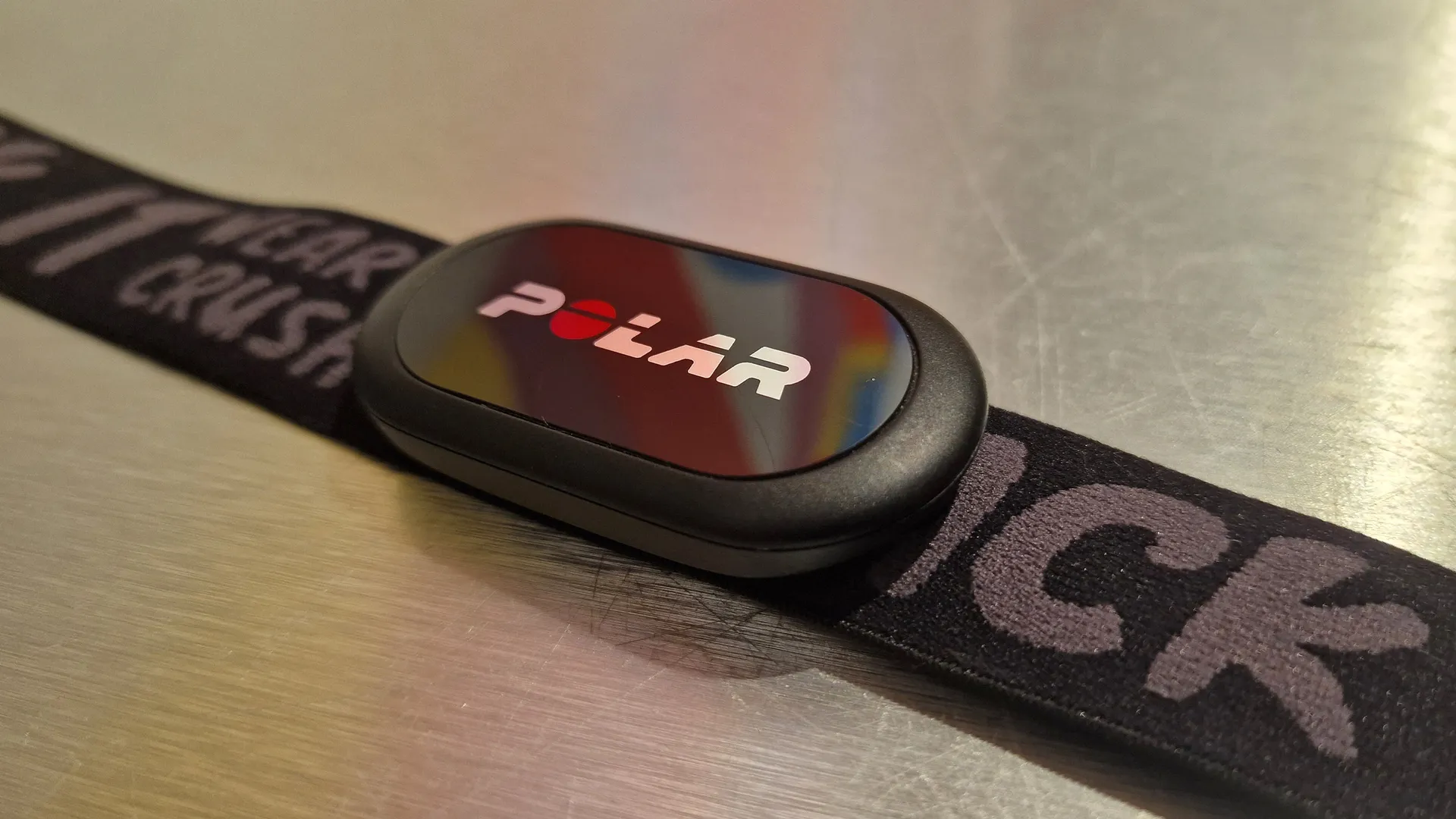
A watch can look perfect on your wrist and still miss the one number your workout depends on. That is why the Polar H10 heart rate monitor keeps its place in American training bags, cycling kits, gym lockers, and home fitness setups. It does one job: read the electrical signal from your chest and send that data to the device you already use. For runners, Peloton riders, CrossFit athletes, and people comparing fitness gear through consumer tech updates, the appeal is plain. You are not buying a bigger screen. You are buying cleaner data. Polar lists the H10 with Bluetooth LE, ANT+ 2.1, WR30 water resistance, recording mode, an accelerometer, and up to 400 hours of training battery life, which explains why the strap still feels current rather than old. The twist is that its age helps it. Newer wrist sensors chase comfort and style. This strap keeps winning because hard intervals, sweat, cold skin, and fast heart-rate changes still expose the limits of optical wrist tracking.
Why the H10 Still Owns the Accuracy Conversation
The H10 has survived several waves of fitness tech hype because it solves a less glamorous problem: bad readings during hard work. A wrist watch may look smarter, but a chest strap sits closer to the source of the signal. That physical location matters when your arms are moving, your skin is cold, or your pace jumps from easy to painful in one minute.
Chest placement gives the sensor a cleaner job
A heart rate chest strap reads from the torso, where the signal is steadier and closer to the heart’s electrical activity. Polar explains that the H10 uses ECG-style electrical sensing, while optical sensors read blood-flow changes through light. That difference is why ECG sensors are still treated as the stronger choice for high-performance sports and medical-style precision.
You feel this most during ugly workouts. Think of hill repeats in Denver, treadmill sprints in a hotel gym, or an indoor bike class where the resistance jumps before your breathing catches up. A wrist sensor may smooth the rise. The H10 reacts like a coach watching your face instead of reading your plan.
The non-obvious part is that accuracy is not only about the highest number. It is about the timing. If your strap catches the climb 10 seconds earlier, your interval data changes. Your recovery call changes too.
Wrist sensors are better now, but the gap has not vanished
Modern watches have improved a lot. Apple, Garmin, Coros, Fitbit, and Samsung all make devices that can be close enough for easy runs and daily tracking. That does not make a chest strap pointless. It makes the strap more specific.
The H10 is for the sessions where “close enough” starts costing you. DC Rainmaker’s long-term testing notes that the strap is broadly accurate across many scenarios, while also calling out the real-world chest-strap issue of needing good moisture and contact at the start of some workouts. That kind of detail matters because it keeps the praise honest.
A better watch does not erase physics. Optical sensors still read through the skin. A chest unit reads the electrical event. For accurate heart rate tracking during sharp changes, that old-school path still has teeth.
Why a heart rate monitor Matters More During Hard Training
Easy movement hides weak data. A walk, a light jog, or a casual spin may not expose much difference between wrist and chest readings. Hard sessions do. That is where athletes notice lag, spikes, and numbers that do not match effort.
Intervals punish slow sensors
During interval work, your heart rate is not a smooth line. It jumps, stalls, falls, and jumps again. If the sensor lags behind that curve, the workout file looks calmer than the workout felt. That can fool you into thinking the session was easier than it was.
A runner doing 400-meter repeats at a high school track in Texas may only spend a short time near the top of each rep. If the wrist reading catches up late, the peak gets softened. The H10 gives a cleaner view of that stress because the ECG heart rate sensor is built for quick changes rather than casual background tracking.
That is also why coaches still like chest data. They can compare effort across weeks without guessing whether a watch strap was too loose or the athlete’s wrist was cold.
Zone training depends on trust
Zone training sounds simple until the numbers wobble. If your easy zone is wrong, you may train too hard on recovery days. If your threshold zone is wrong, you may quit early or push past the point that was planned.
The counterintuitive truth is that better data can make training feel less dramatic. You stop chasing random spikes. You stop arguing with your watch halfway through a tempo run. You settle into the work.
For American home athletes, this is where the H10 fits well. It pairs with many watches, phones, cycling computers, and fitness apps through Bluetooth and ANT+, so you can keep your current setup and clean up the signal feeding it. Polar’s product page also notes broad device connection and one-session memory, which helps when you want to train without staring at a screen.
Comfort, Setup, and the Small Habits That Keep It Accurate
The H10 is not difficult, but it does ask for a small routine. That is the trade. You get better signal quality, but you have to wear a strap correctly. Most complaints about chest units come from skipping the boring parts.
Fit matters more than force
A heart rate chest strap should feel secure, not punishing. If it slides during burpees, rowing, or summer runs, the data may jump. If it is too tight, you will hate wearing it and stop using it after two weeks.
The Polar Pro strap helps here with a firm buckle, soft textile feel, and silicone grip points designed to keep contact steady during motion. Polar’s page describes those design details as part of its motion-control approach. In plain terms, the strap is trying to stay boring while your workout gets messy.
A good test is simple. Put it on, breathe deep, raise your arms, twist, and jog in place. If it shifts, adjust before the session starts. Ten seconds before training saves ten minutes of bad data later.
Moisture is not optional at the start
Chest sensors often behave best once sweat appears. Before that, dry skin can weaken the connection. Wetting the electrode pads before a workout is not a fussy expert trick. It is basic setup.
This matters most in dry winter garages, air-conditioned gyms, and cold morning runs. A rider in Minnesota starting a Zwift session in January may be warm mentally, but the strap is still sitting on dry skin. A little water on the pads can help the first few minutes read cleanly.
The quiet insight: the H10 is not magic. It is a good tool that rewards correct use. That is better than magic because you can control it. Store the strap dry, rinse it after salty workouts, wash the textile strap when needed, and replace the coin cell when the signal starts acting strange.
Where the H10 Fits in a Modern Fitness Setup
The reason this strap still sells is not nostalgia. It works with the gear people already own. You can wear an Apple Watch for apps, a Garmin for training plans, a bike computer for road rides, or a phone for class-based workouts, then let the H10 feed cleaner heart data into that system.
It pairs well with watches, bikes, phones, and gym gear
For many users, the best setup is not replacing a watch. It is improving the input. Pair the strap before your run, ride, or class, then let the watch handle maps, music, pace, and notifications.
Polar says the H10 supports Bluetooth and ANT+, and that matters in mixed homes. One person may use a Garmin Edge on a bike. Another may use a phone app. Someone else may connect to gym equipment. The same strap can sit in the center.
This is one reason the ECG heart rate sensor still feels practical. It does not demand brand loyalty. It works as a signal source first and a brand product second.
Research use keeps its reputation alive
The H10 is often used as a reference point in wearable testing because researchers and reviewers need a chest-based comparison device. A 2026 study reported almost perfect agreement between the H10 and a Lead II ECG system for individual heart-rate measures, while a 2022 validation paper found strong agreement for linear HRV measurements against ECG recordings.
That does not turn the strap into a medical device for self-diagnosis. It does explain the trust. When other devices are being checked, the H10 is often the thing they are checked against.
For buyers, the practical lesson is clear. Use it for training data, effort control, HRV routines, and cleaner workout files. Do not use it as a substitute for a doctor, an ECG appointment, or emergency care.
Conclusion
The H10 keeps winning because it refuses to chase the wrong fight. It does not need a color screen, sleep score, voice assistant, or daily readiness badge to prove its worth. It gives athletes the cleaner signal that many wrist devices still struggle to hold during hard movement. That is why a heart rate monitor like this remains useful even when watches keep getting smarter. The best setup for most Americans is not chest strap versus watch. It is chest strap plus watch, each doing the job it handles best. Wear the strap when precision matters. Skip it for casual walks, errands, and low-stakes movement. That balance keeps the tool from becoming a burden. If your training has started to depend on zones, recovery checks, intervals, or HRV trends, the H10 is still one of the smartest small upgrades you can make. For more gear planning, see smart fitness equipment buying tips and running watch comparison advice.
Frequently Asked Questions
Is the Polar H10 worth buying if I already own a smartwatch?
Yes, if you care about cleaner workout data during hard sessions. A smartwatch is better for maps, apps, notifications, and daily tracking. The H10 is better when you want a stronger chest-based signal during intervals, cycling, rowing, and gym work.
How accurate is the H10 compared with wrist sensors?
It is widely treated as more dependable during fast effort changes because it reads electrical activity from the chest. Wrist sensors can be good for steady workouts, but movement, skin contact, temperature, and lag can affect them during harder training.
Can I use the H10 with Garmin, Apple Watch, Peloton, or Zwift?
Yes, in many cases. The strap supports Bluetooth and ANT+, so it can connect with a wide range of watches, bike computers, phones, training apps, and some gym equipment. Always check your device’s sensor-pairing menu before buying.
Does the strap work without carrying a phone?
Yes, it can record one training session with compatible Polar app setup. That is useful for certain workouts where carrying a phone feels annoying. After the session, you can sync the data back into Polar’s app environment.
What is the main downside of using a chest strap?
Comfort and setup are the main drawbacks. You need to wear it against the skin, moisten the electrodes, and keep the strap clean. Some people dislike the feel, especially during long summer runs or high-rep gym workouts.
How long does the battery last?
Polar lists up to 400 hours of training use. Battery life depends on workout frequency, storage habits, and connection behavior. The unit uses a replaceable coin cell, so you do not need to charge it like a watch or optical armband.
Is the H10 good for HRV tracking?
Yes, it is a strong option for many HRV routines because clean beat-to-beat data matters. For best results, take readings under the same conditions each time, such as after waking, before caffeine, and before training stress changes your baseline.
Should beginners buy a chest strap right away?
Not always. Beginners can start with a watch or phone app and build the habit first. Buy the strap when your training becomes more structured, your wrist readings feel unreliable, or you start using zones to guide effort and recovery.